
Where Velika Planina is
The plateau lies north-east of the town of Kamnik, in the Kamnik–Savinja Alps, and belongs to the municipality of Kamnik. Height references: the average altitude of the plateau is around 1,500 m, and the highest point is Gradišče (1,666 m).
Why Velika Planina is considered unique
One of the largest shepherds' "villages" in Europe
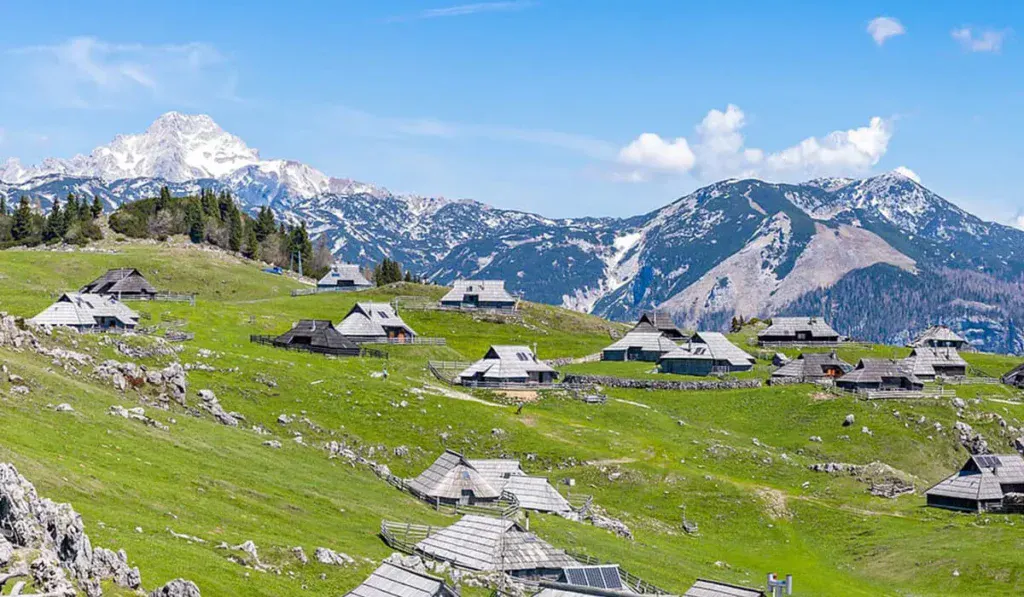
Velika Planina is known precisely for its shepherds' settlement: in summer livestock is brought up here and the plateau "comes to life" — the huts open, seasonal products appear, and the air is full of bells and the scents of mountain herbs. The Slovenian tourism portal emphasises the scale of the settlement and its importance as one of the largest shepherds' settlements.
The recognisable architecture of the huts
The classic image of Velika Planina is wooden huts with spruce shingle roofs that almost "come down" to the ground. This is not a decorative style but functional Alpine architecture adapted to wind and snow.
The traditions of shepherds' cuisine
On the plateau you can try and buy seasonal dairy products. Tourist materials regularly mention the traditional trnič cheese as part of the local shepherds' culture.
The history of Velika Planina
The plateau has been settled and used by people since antiquity: archaeological finds indicate a human presence as far back as prehistoric times. The shepherding tradition took hold in the Middle Ages, and one important historical reference is the type of shepherds' buildings known from finds and the layouts of old huts, including those linked to Preskarjeva bajta.
The Marija Snežna (Our Lady of the Snows) chapel was originally built in 1938, later destroyed and rebuilt in 1988.
What to see: the must-see route
- The shepherds' settlement and a walk across the plateau — the most impressive part: strolling between the huts, coming out onto open viewpoints and feeling the Alpine scale without difficult climbs, especially if you go up by cable car.
- Preskarjeva bajta / the Preskar Museum — a museum shepherd's hut, one of the clearest "entrances" into the culture of Velika Planina. The operator emphasises that this is a key heritage site showing shepherds' life; open during the grazing season.
- The Marija Snežna chapel — a small wooden chapel, one of the symbols of the plateau and a popular photo spot.
- The climb to Gradišče (1,666 m) — the highest point of the plateau and a natural viewpoint, if you want to "add some altitude".
How to get there
Cable car and chairlift
The easiest way for most visitors is the cable car, then the chairlift or a walk across the plateau. Current timetables and intervals are published by the Velika Planina operator.
Walking routes from below
There are marked ascent trails from the valley — people choose this option if the goal is specifically the physical challenge and an "honest" climb.
When it is best to go
Summer (roughly June–September) is the "liveliest" time: the shepherds' season, open huts, more local products.
Winter — the plateau turns into a snowy landscape, popular for winter walks and seasonal activities, including ski infrastructure.
Practical tips
- Dress in layers — the plateau is often windy and the weather changes quickly.
- Comfortable shoes are essential even for an "easy" walk.
- Check the lift timetable on the day of your trip — it is seasonal and depends on the day of the week.
- Allow time not only for the "spots" but for walking between them: the space of the plateau itself is the main effect of Velika Planina.
Velika Planina goes well with a trip to Lake Bled — both destinations are popular with those who have already moved to Slovenia and explore the country at weekends. And if the trip is still being planned along with the move, start with a general overview of what to know before relocating in the article on moving to Slovenia.